Sterilization temperature control requirements for retort autoclaves,SUMPOT UPDATES
We use cookies to improve your online experience. By continuing browsing this website, we assume you agree our use of cookies.

Sterilization temperature control requirements for retort autoclaves

Views : 2863
Author : SUMPOT
Update time : 2024-01-16 10:50:41

Sterilization using retort autoclaves is a common practice in the food and pharmaceutical industries to eliminate bacteria, spores, and other pathogens from products. The temperature control requirements are stringent to ensure effective sterilization while not compromising product quality:
1. Initial Heating: The autoclave must rapidly heat the contents to achieve uniformity of temperature throughout the load. This typically involves a preheating stage where the temperature rises to around 80-90°C (176-194°F) for water-based products. This helps remove any cold spots and air from inside containers.
2. Sterilization Phase: The core temperature should reach and be maintained at the required F0 value (a measurement of sterilization intensity based on time and temperature) or equivalent parameters like saturated steam pressure for a specific holding time. For most low-acid foods, this is usually achieved by maintaining an internal temperature of about 121°C (250°F) under 15 psi (or above depending on altitude), and for sterilizing glassware or some pharmaceutical products, it can be up to 134°C (273°F).
3. Temperature Uniformity: It's crucial that all parts of the load, including the coldest spot, reach and maintain the sterilization temperature for the set duration. Autoclave loads should be arranged to promote even heat distribution, and the autoclave itself should have accurate temperature sensors to monitor this.
4. Cooling Phase: After sterilization, there needs to be a controlled cooling phase to prevent overprocessing or damaging heat-sensitive products. The temperature drop should be managed in such a way as to avoid creating condensation within the packaging which could reintroduce contamination.
5. Record Keeping: Temperature readings and time cycles need to be accurately recorded to provide evidence of proper sterilization and comply with regulatory standards.
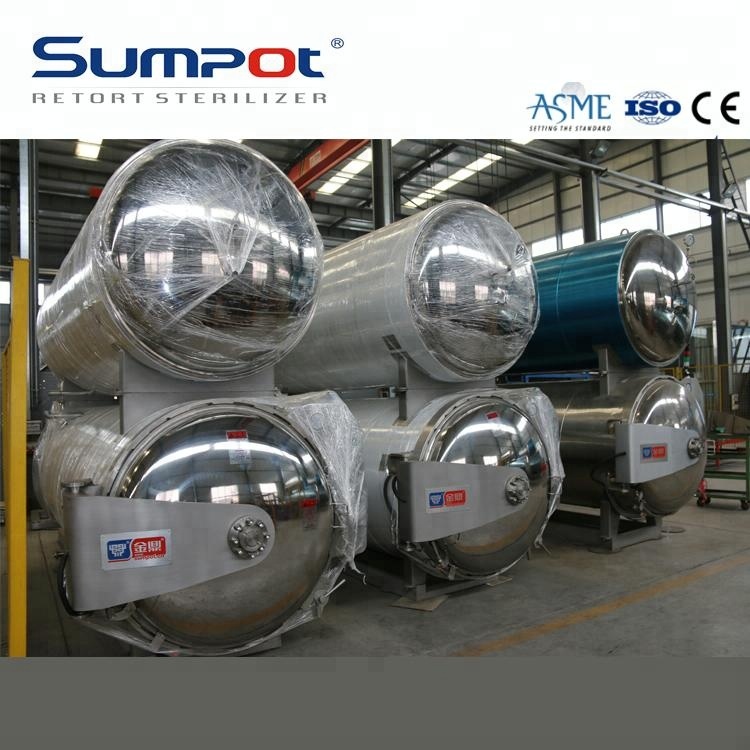

keywords:retort machine,food sterilizer,industrial autoclave,sterilization equipment,retort processing in food industry,canning line,food production line,autoclave,retort sterilizer,retort system,horizontal retort
Related News
Read More >>
The Benefits of Retorts (Sterilization Autoclaves) for Ready-to-Eat Meals The Benefits of Retorts (Sterilization Autoclaves) for Ready-to-Eat Meals
Aug .29.2025
Retorts, also known as sterilization autoclaves, are essential equipment in the production line of ready-to-eat (RTE) meals. By creating a high-temperature, high-pressure saturated steam environment, they thoroughly eliminate microorganisms in products, including pathogenic and spoilage bacteria, thereby delivering multiple critical benefits for RTE meals.
Advantages of Retort Sterilization Technology in Sardine Can Production – Innovative Solutions for the Food Machinery Industry Advantages of Retort Sterilization Technology in Sardine Can Production – Innovative Solutions for the Food Machinery Industry
May .13.2025
Introduction: Retort Sterilization Technology – The Guardian of Food Safety and Quality
In today's rapidly developing food industry, consumers are increasingly demanding higher standards for food safety, nutritional retention, and product quality. As a key category in aquatic product processing, the sterilization process of sardine cans directly impacts their market competitiveness. Retort sterilization technology (high-temperature and high-pressure sterilization) has become one of the core technologies in the modern food machinery industry due to its advantages in efficient sterilization, nutrient preservation, energy savings, and environmental friendliness. This article will provide an in-depth analysis of the outstanding performance of Retort sterilization technology in sardine can production from the perspectives of technical principles, industry applications, and market value, offering professional insights for food machinery manufacturers, sterilization equipment suppliers, and canning producers.
Retort Autoclave Production Line: Comprehensive Overview of Functions and Advantages Retort Autoclave Production Line: Comprehensive Overview of Functions and Advantages
Apr .23.2025
The retort autoclave production line represents a significant advancement in industrial sterilization technology, primarily serving the food processing, pharmaceutical, and cosmetics industries. This sophisticated system utilizes a combination of high-temperature steam and pressure to achieve commercial sterilization of packaged products, ensuring both safety and extended shelf life while preserving the organoleptic qualities of the processed goods. As global demand for shelf-stable, convenient food products continues to rise, retort technology has become increasingly vital for manufacturers seeking to meet stringent food safety standards while maintaining production efficiency.
Key Advantages of Autoclave Sterilization for Tinplate Cans/Glass Jars Key Advantages of Autoclave Sterilization for Tinplate Cans/Glass Jars
Apr .02.2025
The autoclave sterilization system is a critical technology in food processing, particularly for tinplate cans and glass jars. Its high efficiency, reliability, and safety make it the gold standard for achieving commercial sterility in canned foods. Compared to alternative sterilization methods , autoclaves offer superior microbial control, production efficiency, and product quality retention. This article focuses on the core advantages of autoclave sterilization for metal and glass containers.